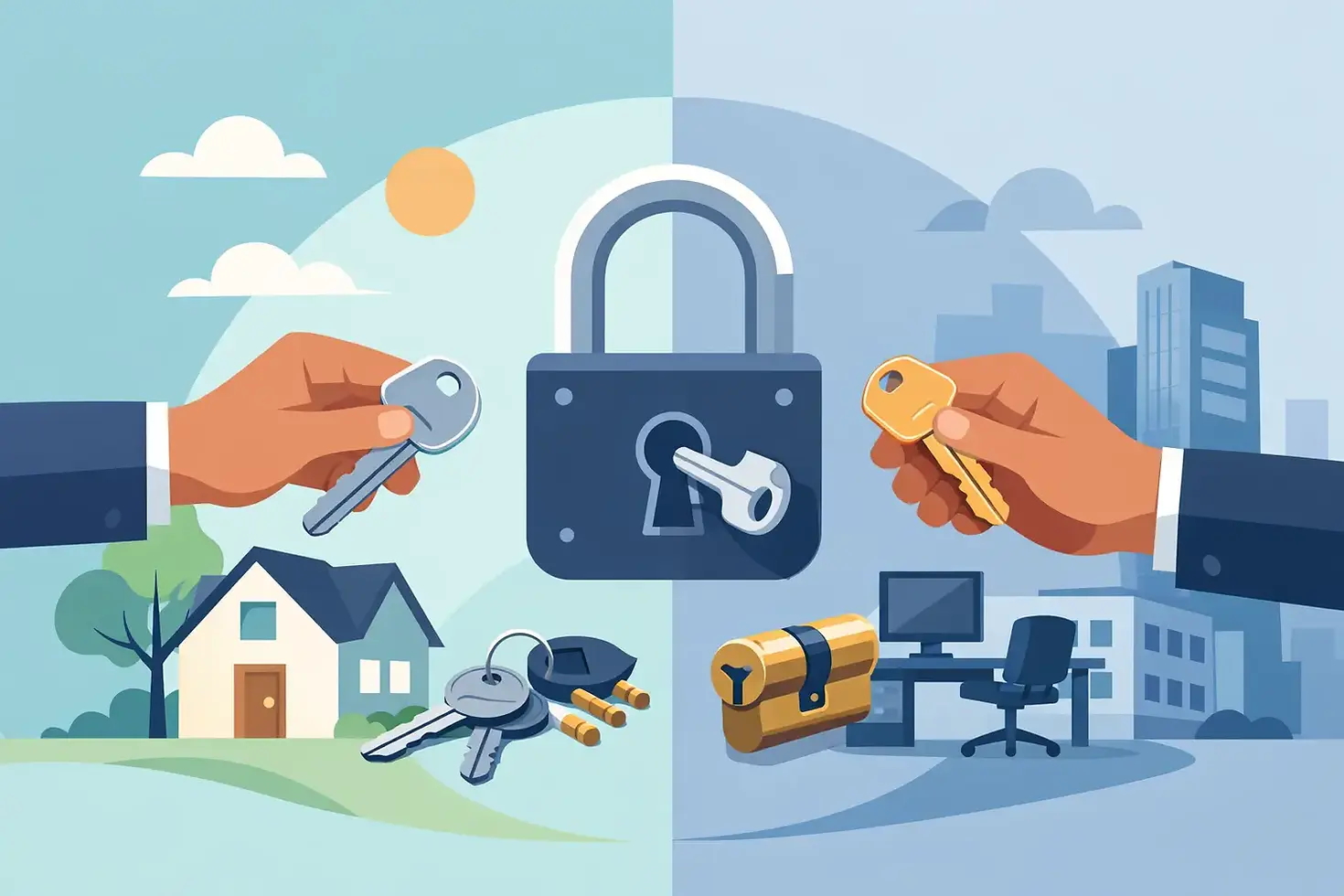
When Should You Rekey Locks at Home or Work?
A spare key you cannot account for is not a small issue. It is a security gap. If you are asking when should you rekey locks, the answer usually comes down to one thing - the moment you are no longer fully certain who has access to your home, office, or rental property.
Rekeying is one of the fastest ways to restore control without replacing the entire lock. For homeowners, it protects your family and property after a move, a breakup, or a lost key. For property managers and business owners, it helps tighten access after tenant turnover, employee changes, or contractor work. The goal is simple: make old keys useless and put access back in the right hands.
What rekeying actually does
Rekeying changes the internal pins of an existing lock so it works with a new key. The lock hardware can often stay in place, which makes this a practical option when the lock body is still in good condition.
That matters because many people assume every key security issue requires full lock replacement. It does not. If the lock is functioning properly and the hardware is worth keeping, rekeying is often the more efficient move. You keep the protection you need without paying for unnecessary new hardware.
When should you rekey locks after moving?
If you just moved into a house, condo, or apartment, rekeying should happen immediately. You do not know how many copies of the old keys exist or who may still have one. Previous owners, former tenants, cleaners, dog walkers, real estate agents, contractors, and maintenance staff may all have had access at some point.
Even if everyone involved seems trustworthy, the issue is not trust alone. It is control. Keys get copied, forgotten, passed along, and left in drawers. Rekeying removes that uncertainty fast.
For rental property owners, the same rule applies between tenants. A turnover is one of the clearest answers to the question of when should you rekey locks. A new tenant should not inherit unknown key exposure from a previous occupant.
Lost keys mean lost control
If your keys are missing and you do not know exactly where they are, rekeying is usually the safest call. The level of urgency depends on what was lost and what information was attached to it.
A house key lost inside your own home is very different from a key ring lost with your address, office badge, or unit number. In the second case, the risk is much higher. Anyone who finds those keys may know where they work. Waiting too long creates an avoidable vulnerability.
This is especially important for commercial properties. A missing office key can expose main doors, storage areas, private suites, or restricted rooms. Rekeying affected cylinders quickly helps contain the problem before it turns into unauthorized entry.
After a break-in or attempted break-in
After forced entry, many people focus on the obvious damage first - broken frames, splintered doors, bent hardware, or shattered glass. Those repairs matter, but access control matters too. If a burglar used a key, manipulated the lock, or stole keys during the incident, rekeying should be part of the response.
Even if the intruder did not use a key, the event changes the security picture. A break-in is a strong reason to reassess the condition of your locks and decide whether rekeying is enough or whether an upgrade makes more sense. Sometimes the lock can be saved. Sometimes damaged or outdated hardware should be replaced with stronger deadbolts or higher-security cylinders.
Relationship changes and household transitions
Some of the most common rekey requests happen after personal changes. Separation, divorce, roommate departures, caregiver changes, and domestic staffing turnover all affect who may still have a key.
In these situations, speed matters. If someone who once had authorized access no longer should, rekeying is a direct way to reestablish boundaries and security. It is often faster and more cost-effective than replacing every lock on the property, especially if several doors are keyed alike.
The same applies to vacation homes and secondary properties. If multiple guests, service providers, or temporary occupants have had access over time, rekeying helps reset the property before the next season or occupancy period.
Staff turnover and commercial access changes
For businesses, rekeying should be part of any serious access control plan. When an employee leaves, especially under difficult circumstances, it is smart to review what keys they had and which areas they could enter.
This is not only about front doors. Interior offices, file rooms, equipment closets, cash handling areas, and inventory spaces may all be exposed. In a smaller business, one copied key can create a bigger problem than expected.
That is why office operators and property managers often rekey after staffing changes, contractor offboarding, or tenant transitions. In some settings, a partial rekey is enough. In others, it makes more sense to redesign the system altogether with restricted keys or a master key structure that gives management tighter control.
When rekeying is smarter than replacing
Rekeying is usually the better option when the lock is in solid working condition, the hardware matches the property, and the issue is key control rather than mechanical failure. It is efficient, practical, and often less disruptive.
This works well for homes that need all entry doors brought under one key, rental units between occupants, and commercial suites where access needs to be reset quickly. It also helps when you want to keep existing finishes or maintain a consistent look across the property.
But rekeying is not always enough. If the lock is worn out, low quality, visibly damaged, or outdated from a security standpoint, replacement may be the better investment. If you are dealing with repeated sticking, loose cylinders, poor latch alignment, or hardware that no longer meets your security needs, a fresh lock installation can solve both the access issue and the performance issue at the same time.
Signs you should not wait
Some situations call for immediate action rather than a wait-and-see approach. If keys were stolen, if there was a recent eviction, if a disgruntled former employee had access, or if a break-in involved key theft, rekeying should move up the priority list quickly.
Another red flag is uncertainty. If no one on site can clearly say who has copies of the keys, your security is already weaker than it should be. That is often the point where a professional locksmith can help assess whether rekeying a few cylinders is enough or whether a broader reset is needed.
Rekeying and master key systems
Commercial buildings, multi-unit properties, and offices often need more than a simple one-door rekey. They need a controlled structure. Rekeying can be used to build or revise a master key system so managers have broad access while staff or tenants only access designated areas.
This is where technical planning matters. A rushed rekey without considering hierarchy, future turnover, and restricted areas can create confusion later. Done properly, rekeying strengthens both day-to-day convenience and long-term security management.
A practical rule for property owners
If access has changed, rekeying should at least be considered. That includes moving, turnover, missing keys, break-ins, staffing changes, and any situation where previous key holders should no longer enter.
The question is not just when should you rekey locks. It is how long you are willing to leave known uncertainty in place. For most homes and businesses, the safer answer is not long.
A reliable locksmith can tell you quickly whether your current hardware can be rekeyed, whether it should be upgraded, and how to secure the property without wasting time or money. For urgent situations, that kind of clear action matters. Complete Door and Lock handles those moments with the speed and security focus property owners need.
When key control slips, confidence goes with it. Rekeying is often the fastest way to take that control back and make sure access belongs only to the people who should have it.

Comments