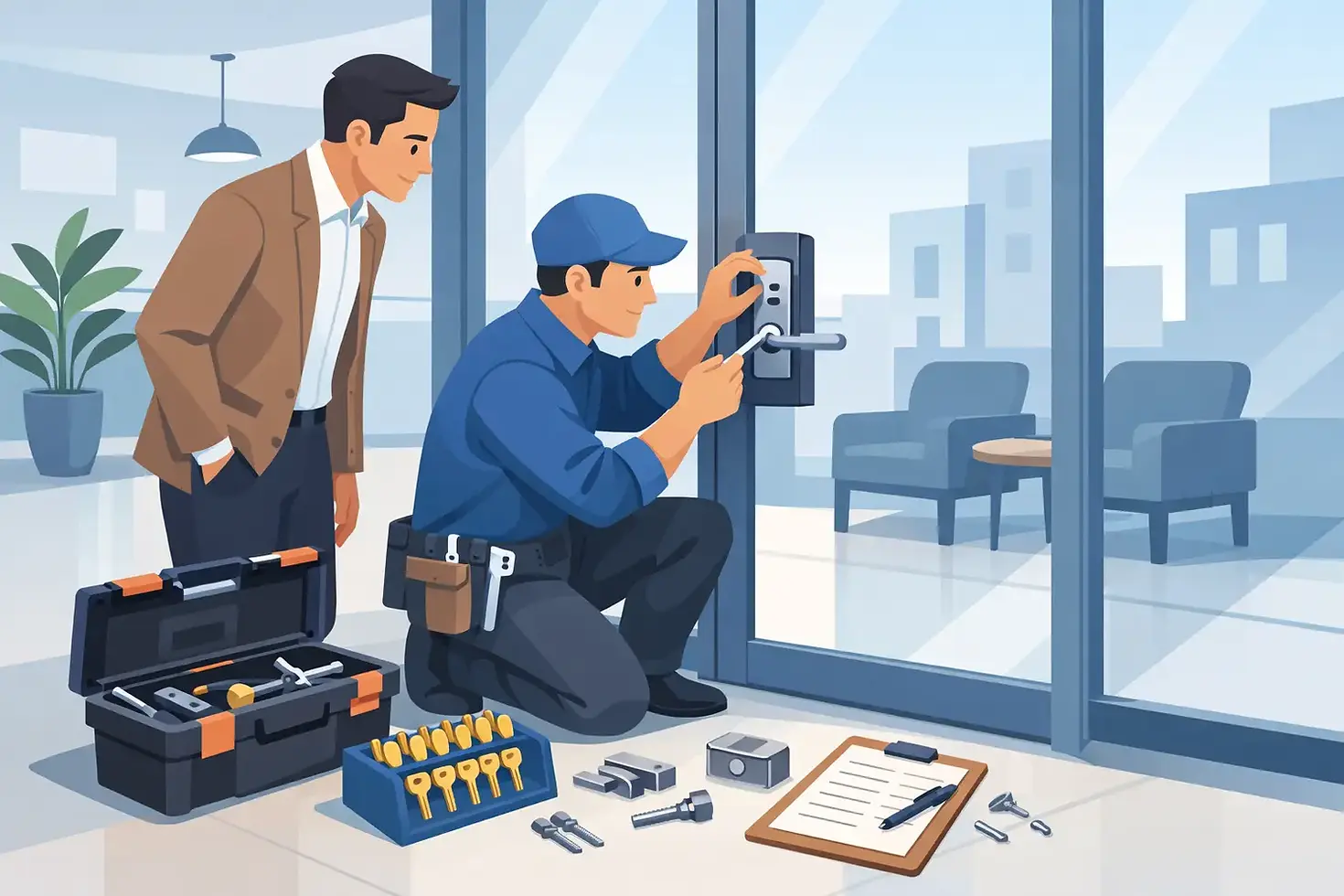
When Commercial Door Lock Replacement Is Needed
A storefront door that needs a hard pull to latch, a key that sticks before opening, or a lock damaged after an attempted break-in is more than a maintenance issue. It is a security gap that can disrupt staff, expose inventory, and leave your business vulnerable after hours. Commercial door lock replacement restores controlled access before a minor failure becomes an urgent lockout or security incident.
For offices, retail locations, warehouses, medical practices, and multi-unit properties, the right response depends on the condition of the door, the lock hardware, and who needs access. Replacing a lock is not always the first answer. But when the hardware can no longer provide reliable protection, a professional replacement is the direct path back to security.
When a Commercial Door Lock Should Be Replaced
Commercial locks are built for repeated use, but constant traffic takes a toll. A worn latch, loose cylinder, damaged strike plate, or misaligned door can make a secure entry unreliable. If the door does not close and latch consistently, the lock is no longer doing its primary job.
Replacement is often the right call when the lock has visible damage, internal components are failing, or the key can be removed while the door is unlocked. A lock that turns without engaging, requires repeated force, or opens unpredictably should be addressed immediately. These are common signs that the cylinder, latch assembly, mortise case, or internal mechanism has reached the end of its service life.
Break-ins and attempted break-ins also change the equation. Even if a damaged lock still appears to operate, forced entry can weaken internal parts, bend the door frame, damage the strike, or compromise the hardware’s ability to resist another attack. After an incident, the goal is not simply to make the door close. The goal is to restore a dependable line of defense.
Lost keys, former employees with unreturned keys, and tenant turnover can also require action. In some cases, rekeying is enough. If the lock is already worn, outdated, or incompatible with your current access needs, replacement may provide better long-term value.
Repair, Rekey, or Commercial Door Lock Replacement?
A qualified locksmith should assess the whole opening, not just the keyhole. Many lock problems are caused by door alignment, hinge wear, a loose closer, or a damaged strike plate. Replacing a lock without correcting these issues can shorten the life of new hardware and leave the door difficult to secure.
Repair makes sense when the lock body is sound and the problem is isolated. A loose lever, worn latch bolt, or misaligned strike may be corrected without installing a new lock. This is often the most cost-effective option for newer, quality commercial hardware.
Rekeying changes the internal pins of a compatible lock so old keys no longer work. It is a strong option after staff changes, lost keys, or a lease transition when the hardware remains in good condition. Rekeying is generally faster and less disruptive than replacing every lock, especially at properties with several doors.
Commercial door lock replacement is the better choice when the hardware is damaged, unreliable, obsolete, or too low-grade for the risk level of the property. It is also the right time to replace a lock when you are moving from separate keys to a master key system, upgrading to restricted keyways, or introducing electronic access control.
Choose Hardware for the Door and the Risk
Not every commercial entrance needs the same lock. A low-traffic interior office door has different demands than a rear service entrance, pharmacy storage room, condominium common door, or warehouse access point. The lock must match the door type, traffic volume, fire-rating requirements, and level of security required.
For many business entrances, commercial-grade cylindrical lever locks provide dependable daily use and meet accessibility needs. Mortise locks are common on higher-traffic doors because they offer durable internal construction and can support multiple functions in one lock body. Deadbolts may add protection to certain doors, but they must be selected and installed correctly so they do not interfere with emergency egress or applicable building requirements.
High-security cylinders can help reduce the risk of unauthorized key duplication, bumping, and picking. They are particularly valuable for businesses with frequent personnel changes, sensitive records, valuable equipment, or multiple locations. The trade-off is that high-security systems require greater planning and controlled key management. That control is often exactly what a growing business needs.
Electronic locks and smart access systems can provide audit trails, scheduled access, credential management, and the ability to remove access without collecting physical keys. They can be a practical upgrade for offices and managed properties. However, electronic hardware still depends on proper installation, reliable power or battery maintenance, and a clear plan for emergency access. Technology should strengthen your security process, not complicate it.
Do Not Overlook the Door Frame and Strike
A strong lock installed on a weak frame creates a false sense of security. The strike plate, reinforcement hardware, mounting screws, hinges, and door closer all affect how well an entry resists force and closes securely.
During a replacement, the locksmith should check whether the latch or bolt fully enters the strike. If it does not, staff may pull the door shut without realizing it is not secured. Frame reinforcement and properly fitted strike hardware can make a significant difference, especially on exterior doors that have been kicked, pried, or repeatedly slammed.
Plan Access Before New Keys Are Cut
A replacement project is an opportunity to regain control over who can enter your business. Before choosing hardware, identify every person and role that requires access. Managers may need entry to all areas, while cleaning crews, contractors, and temporary staff may only need access to specific doors or time periods.
For a single location, a master key system can reduce key clutter while keeping sensitive rooms restricted. A property manager may carry one master key, while individual tenants or departments retain keys that only open their own spaces. The system must be planned carefully from the start. Poorly managed keying can create access conflicts and make future changes more expensive.
For businesses that have accumulated keys over years of turnover, a fresh key control plan is often as valuable as the new lock itself. Record who receives each key, limit duplication authority, recover keys during offboarding, and review access after management changes. A secure lock cannot compensate for uncontrolled keys.
What to Expect During Replacement
Professional commercial lock replacement begins with an inspection of the door, frame, existing hardware, and security concerns. The technician should confirm the correct lock function, handing, backset, door thickness, and compatibility with existing cutouts. These details matter. Installing the wrong function can create an access problem, interfere with exit requirements, or leave a door unable to latch correctly.
The old hardware is removed, the opening is repaired or prepared as needed, and the new lock is fitted and tested under normal operating conditions. Testing should include key operation, interior exit, latch engagement, door closure, and alignment with the strike. If the business uses a master key system or electronic credentials, access should be confirmed for each authorized user before the work is complete.
For a break-in or lock failure after hours, speed matters. A 24/7 emergency locksmith can secure the opening, replace compromised hardware, and recommend follow-up repairs if the door or frame also needs work. Temporary measures may be necessary in severe cases, but the objective remains clear: restore secure access without leaving the property exposed overnight.
Protect the Replacement Investment
New commercial hardware lasts longer when the door operates correctly. Train staff not to force keys, prop open secure doors, or slam doors against misaligned frames. Report sticking locks early, before a key breaks inside the cylinder or an employee is locked out during a busy shift.
Routine inspections are especially useful for doors with heavy traffic, including retail entrances, apartment common areas, loading doors, and office suites. Check that the door closes fully, the latch engages, the closer controls the swing, and the strike remains tight. Small corrections can prevent an emergency call later.
For Toronto and GTA businesses, Complete Door and Lock can respond when a commercial entry is damaged, inaccessible, or no longer secure. Whether the need is an urgent replacement, a high-security upgrade, or a better key control plan, the right hardware should leave your team with reliable access and your property protected when the lights are off.

Comments