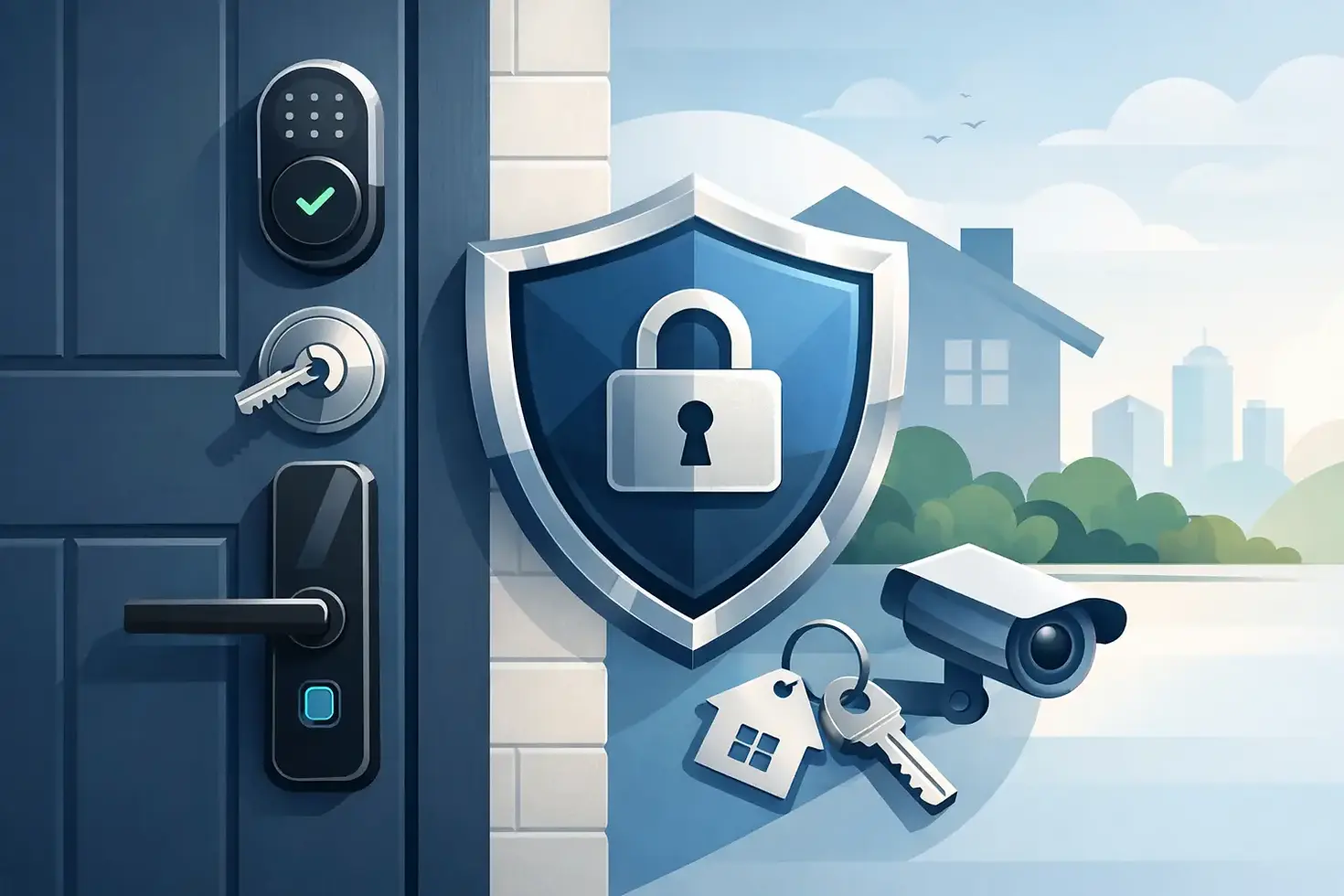
Best Locks for Front Doors That Add Real Security
A front door can look solid and still be the weakest point in a property. The problem is often not the door itself. It is a worn deadbolt, a lightweight strike plate, loose hardware, or a lock that no longer matches the security needs of the home or business.
The best locks for front doors do more than keep a door closed. They resist forced entry, fit the door and frame correctly, provide dependable daily access, and give the property owner control over who can enter. For most homes, that means starting with a quality deadbolt and strengthening the surrounding hardware. For rentals, offices, and managed properties, key control and access management may matter just as much.
Best Locks for Front Doors: Start With the Right Grade
Lock grade is one of the clearest ways to compare mechanical security. In the United States, ANSI/BHMA grading tests locks for durability, strength, and resistance to common forms of attack. Grade 1 is the highest level, Grade 2 is a strong residential standard, and Grade 3 is generally intended for lighter-duty use.
A Grade 1 deadbolt is the strongest choice for a front entry, high-value residence, busy rental property, or commercial exterior door. It is built for frequent use and higher resistance to force. Grade 2 deadbolts are often a practical choice for standard residential doors when they are installed correctly. Grade 3 locks may be suitable for low-risk interior applications, but they are not the first choice for a primary exterior door.
A high grade alone does not guarantee protection. A Grade 1 deadbolt installed into a weak frame or short strike screws cannot perform as intended. The full entry system matters.
The Core Choice: Single-Cylinder or Double-Cylinder Deadbolt
For most front doors, a single-cylinder deadbolt is the practical standard. It uses a key on the exterior and a thumb turn on the interior. It allows occupants to leave quickly without searching for a key, which is a major safety advantage during an emergency.
A double-cylinder deadbolt requires a key on both sides. It can add protection when glass is close enough to the lock for someone to break the panel and reach the thumb turn. However, it can also slow an exit during a fire or urgent evacuation. Building codes, local regulations, and the door layout should be checked before choosing one.
For many properties, the better answer is not automatically a double-cylinder lock. It may be a single-cylinder Grade 1 deadbolt combined with secure glazing, a reinforced strike plate, and a properly protected door frame.
Look for a Full One-Inch Throw Bolt
A deadbolt should extend deeply into the door frame. A one-inch throw bolt is a common benchmark for exterior security because it gives the bolt more engagement with the frame. The bolt should also be made from hardened material that resists sawing and impact.
Avoid relying on a spring latch as the main lock on a front entry. Latch bolts can be useful for keeping a door shut, but a deadbolt provides the primary resistance against kick-ins and forced opening.
Smart Locks Are Best When Access Control Is the Priority
Smart locks can be an excellent front-door upgrade, especially for households that frequently manage guests, service providers, children, tenants, or staff. Instead of handing out multiple physical keys, the owner can issue codes, change permissions, and remove access when it is no longer needed.
The best smart lock is not simply the one with the most app features. It should have a secure physical lock body, reliable manual override, strong battery alerts, and access controls that fit the property. A smart lock should never leave a resident locked out because its batteries failed or its connection dropped.
For homeowners, a keypad deadbolt can remove the risk of lost keys and make everyday entry easier. For property managers, code changes between tenants can reduce the need to recover keys. For offices, smart access may be useful for tracking schedules and limiting entry outside business hours.
There are trade-offs. Smart locks require battery maintenance and thoughtful setup. A property with several occupants needs clear rules about who can create codes and receive administrative access. If the door is exposed to severe weather, the model must be rated for those conditions. A quality mechanical deadbolt remains a dependable option when simple, proven protection is the goal.
High-Security Deadbolts for Better Key Control
Traditional keys can be copied without the owner knowing. That creates a long-term security issue after a move, employee turnover, a lost key, or a break-in. High-security cylinders address this concern through restricted keyways, patented key systems, pick-resistant designs, and stronger internal components.
This type of lock is particularly valuable when key control matters. Landlords may want to limit unauthorized duplication. Business owners may need to know exactly which people have keys to exterior doors. Homeowners who have recently purchased a property may want more assurance than a basic rekey can provide.
A restricted key system does not eliminate every risk, but it creates a more controlled process for issuing duplicates. It is often a sensible upgrade for properties with multiple users, sensitive inventory, or repeated turnover.
The Strike Plate and Frame Decide Whether the Lock Holds
A lock can be difficult to pick and still fail under a hard kick if the strike plate is thin or attached with short screws. The strike plate is the metal hardware on the frame that receives the deadbolt. It must be strong enough to transfer force into the structural framing behind the jamb.
For front doors, use a reinforced strike plate secured with long screws that reach the wall framing. This is one of the most effective improvements available because it strengthens the area that commonly fails during forced entry.
Also inspect the condition of the door frame. Cracked wood, loose trim, damaged jambs, and gaps around the door reduce security. Following a break-in attempt, the repair should address the frame and strike area, not just replace the lock. Installing a stronger deadbolt into damaged wood only creates a false sense of protection.
Match the Lock to the Door Construction
The best lock must fit the actual door. Solid wood, fiberglass, steel, and glass-paneled doors each present different security considerations. A steel or solid-core door generally provides a stronger foundation than a hollow-core door, while decorative glass may require attention to lock placement and interior access.
Door thickness, backset, bore hole size, and handing affect which lock can be installed correctly. Incorrect installation can cause the bolt to bind, prevent full engagement, or wear down the lock prematurely. A deadbolt should operate smoothly without lifting, pulling, or forcing the door into position.
For a commercial entry, consider the door closer, panic hardware requirements, traffic volume, and fire-rating requirements before selecting any lock. Commercial doors often need a coordinated solution rather than a residential-style deadbolt added after the fact.
When Rekeying Makes More Sense Than Replacing
Replacement is not always necessary. If the lock body is in good condition but keys have been lost, copied, or retained by a previous occupant, rekeying can restore control at a lower cost. It changes the internal pin configuration so old keys no longer work.
Replacement is the better choice when the lock is loose, corroded, repeatedly sticking, damaged after an attempted break-in, or too basic for the current security risk. It is also the right time to upgrade when moving into a new home, taking over a commercial space, or changing a rental property between occupants.
Do not wait for a lock to fail completely. Difficulty turning a key, a bolt that will not extend fully, or a latch that catches can signal alignment problems or internal wear. On an exterior door, those issues can become a lockout or leave the property less secure than it appears.
A Practical Front-Door Security Setup
For most homeowners, a Grade 1 or Grade 2 single-cylinder deadbolt, reinforced strike plate, long frame screws, and properly aligned door provide a strong baseline. Add a high-security cylinder if key duplication is a concern, or choose a well-built smart deadbolt if controlled code access fits the household.
For rental and commercial properties, prioritize rekeying between users, documented key control, restricted keys where appropriate, and a lock system that can grow with the property. Master key systems can simplify access, but they need careful planning so convenience does not create unnecessary exposure.
Complete Door and Lock can assess the lock, door, frame, and access needs together, including emergency repairs after a break-in or a planned security upgrade. The right choice is the one that protects the property without making safe daily entry or emergency exit harder.
Your front door should give you confidence every time it closes. Choose a lock that is rated for the job, reinforce what holds it in place, and address small signs of wear before they become an urgent security problem.

Comments